
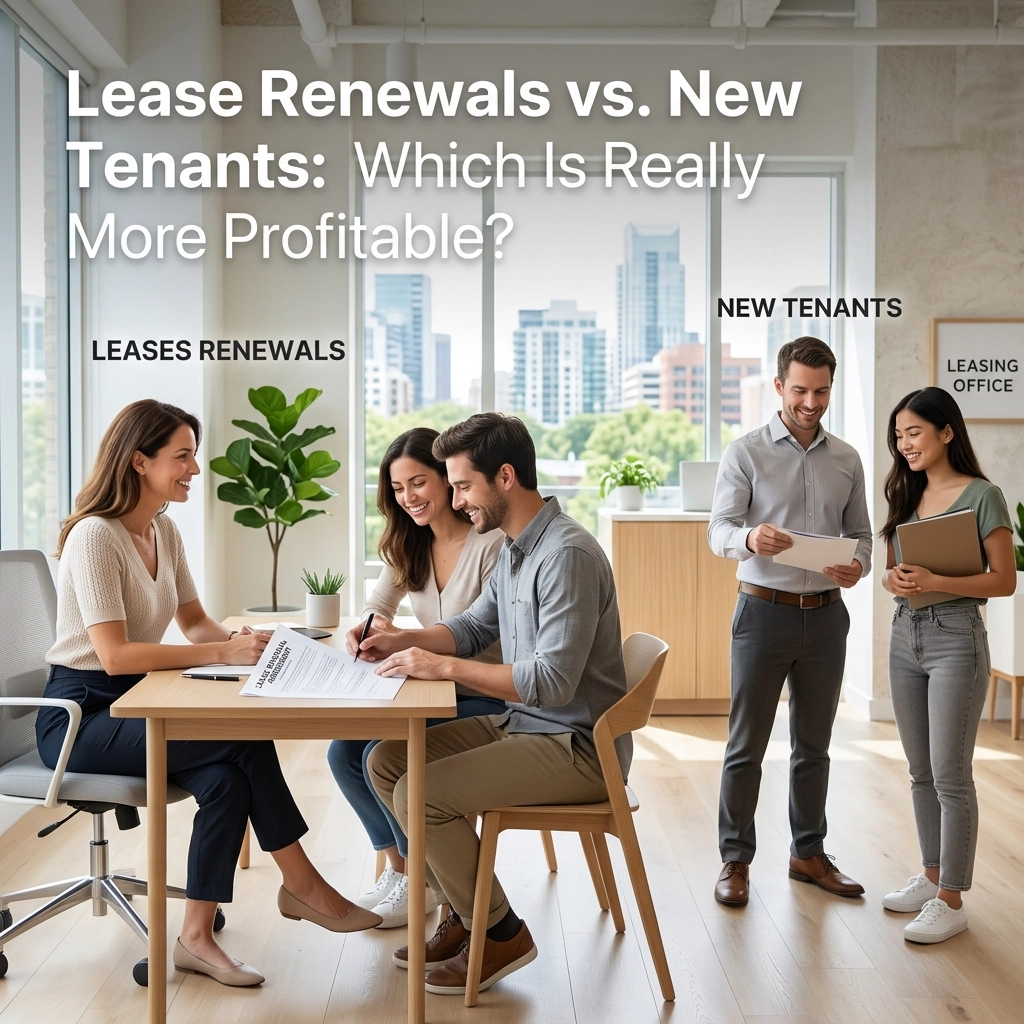
If you’ve owned springfield rental properties for more than a few months, you’ve probably had that late-night "landlord math" session. You look at the market, see that rents in your neighborhood have ticked up by $150, and think, "If I just let this current lease expire and find someone new, I’ll be raking it in."
It’s a tempting thought. On paper, more rent equals more profit. But as someone who spends my days deep in the trenches of property management in Springfield IL, I’m here to tell you that the math is often a trap.
In the industry, we call it the "Turnover Monster." It’s the invisible expense that eats ROI for breakfast. Today, I want to pull back the curtain on why keeping a good tenant is almost always more profitable than chasing a higher rent check from a stranger, and show you exactly how we keep residents happy so they never want to leave.
1. The "Invisible" Bill: What a Turnover Actually Costs
When a tenant moves out, most owners think about the cost of a gallon of paint and maybe a weekend of cleaning. In reality, a turnover is a financial sinkhole. Let’s look at the "hidden" costs that hit your ledger the moment those keys are handed back.
- The Vacancy Gap: This is the big one. Even in a hot market, it takes time to clean, list, show, and vet a new tenant. If your property sits empty for just 30 days, you’ve lost 8.3% of your annual income. That $150 rent increase you wanted? It will take you nearly two years just to break even on that one lost month of rent.
- The "Standard" Refresh: We’ve all seen it. A tenant who lived there for two years was "clean," but once the furniture is gone, you realize the walls have scuffs, the carpets need a deep steam, and the blinds are bent. A professional deep clean and a touch-up paint job can easily run $500–$1,200.
- Marketing and Leasing Fees: Between listing syndication, photography, and the time spent vetting dozens of unqualified applicants, the soft costs are massive.
- Utility Carry: When the unit is empty, you’re the one paying the heat, water, and electric. It’s a small leak, but it adds up.
In Short: A typical turnover for a mid-range Springfield home can easily cost between $2,500 and $5,000 when you factor in vacancy and labor.
2. The Case Study: The 3-Year Tenant vs. The Annual Churn
Let’s look at two hypothetical scenarios for a home renting at $1,500 a month.
Scenario A: The "Steady Freddy" (3-Year Tenant)
- Year 1: Rent is $1,500.
- Year 2: Rent increases to $1,545 (3% bump). Renewal cost: $250 (administrative/inspection).
- Year 3: Rent increases to $1,590 (3% bump). Renewal cost: $250.
- Total 3-Year Revenue: $55,620.
- Total Turnover Costs: $0.
- Total Profit (minus taxes/ins): Roughly $55,120.
Scenario B: The "Rent Chaser" (New Tenant every year)
- Year 1: Rent is $1,500.
- Year 2: Tenant leaves because of a high rent hike. 1 month vacancy. New tenant at $1,650.
- Year 3: Tenant leaves. 1 month vacancy. New tenant at $1,750.
- Total 3-Year Revenue (minus 2 months vacancy): $54,300.
- Total Turnover Costs: (2 turnovers at $2,000 each for paint/cleaning/leasing): $4,000.
- Total Profit (minus taxes/ins): Roughly $50,300.
The Verdict: Even with significantly higher "sticker price" rent in Scenario B, the owner who focused on retention walked away with $4,820 more in their pocket. That’s the power of stability.
3. The Psychology of the "Death Rattle"
I remember a property we took over a few years back. The owner was adamant about pushing for top-of-market rent every single year. He had a 100% turnover rate. Every June, the unit was empty.
One year, a tenant moved out and we went in to do the "standard" refresh. Well, the AC unit chose that moment to give its final "death rattle." Because the unit was empty and the heat was off for a few days during a snap, a pipe also developed a pinhole leak. What should have been a simple lease renewal turned into a $7,000 capital expense nightmare.
When a tenant stays in place, the house stays "conditioned." They notice when the AC sounds funny. They notice the leak under the sink before it rots the subfloor. A long-term tenant is a partner in your property’s health. If you want to learn more about how we vet for these kinds of "partner" residents, check out our qualifications page.
4. How We Keep Them: The Springfield Real Estate Value-Adds
At Springfield Real Estate, LLC, we don’t just hope tenants stay; we give them every reason to. Our philosophy is that a happy resident is a profitable resident. Here’s how we drive high renewal rates for our owners:
Quick Maintenance Response
Nothing kills a renewal faster than a dripping faucet that takes three weeks to fix. We treat maintenance as a customer service priority. By fixing small issues fast, we prevent them from becoming big, expensive problems later.
Credit Reporting via Elevate Perks
This is a game-changer. Most renters pay their biggest monthly expense, rent, and get zero credit for it. Through our Elevate Perks program, we report on-time payments to the credit bureaus. This helps our residents build their credit scores just by living in one of our managed homes. It’s a massive incentive for them to stay put and keep paying on time.
The "Oops" Protection (Accidental Damage & Lockouts)
Life happens. Someone gets locked out at 10 PM on a Tuesday, or a guest accidentally cracks a window. Instead of the tenant feeling like the landlord is "out to get them" with fees, our resident benefit packages can include lockout reimbursements and accidental damage coverage. It turns a potential conflict into a "don't worry about it, we've got you covered" moment.

5. When Should You Actually Let a Tenant Go?
I’m an advocate for renewals, but I’m not a zealot. There are times when "The Turnover Monster" is a necessary evil. You should consider letting a lease expire or pushing for a major change if:
- Chronic Late Payments: If you’re spending more time chasing rent than managing the asset, the "stability" isn't worth the stress.
- Property Neglect: If our inspections show the tenant is living like a rockstar in a hotel room (and not the good kind), it’s time to move on to protect your investment.
- Significant Under-Market Rent: If your property is renting for $1,000 and the market is now $1,600, a $600 gap is enough to justify the turnover cost. We help our owners navigate these "rent vs. reality" conversations every day through our market property management analysis.
Summary: The Retention Checklist
If you’re managing your own springfield rental properties, use this checklist to decide your next move:
- Step 1: Calculate your "Breakeven." How many months of the "new" higher rent does it take to pay off one month of vacancy?
- Step 2: Inspect the unit. Does it need a major refresh anyway? If so, turnover might be the right time.
- Step 3: Evaluate the tenant. Are they quiet? Do they report maintenance? If yes, they are worth their weight in gold.
- Step 4: Offer a "Retention Perk." Sometimes a simple carpet cleaning or a $50 gift card to a local Springfield restaurant upon renewal is enough to seal the deal.
The Verdict
Profitability in real estate isn't found in the highest possible rent; it’s found in the lowest possible expenses. By focusing on springfield il property management strategies that prioritize resident satisfaction, you drastically reduce your biggest expense: turnover.
At Springfield Real Estate, LLC, we pride ourselves on maintaining a professional, respectful relationship with our residents. We’ve found that when you treat a rental like a home rather than just a line item, the profits follow naturally.
Ready to stop the "Turnover Monster" from eating your cash flow? Contact us today and let’s talk about how we can stabilize your portfolio and maximize your real-world returns.
Disclaimer: The information provided in this blog post is for general informational purposes only and does not constitute legal, financial, or investment advice. Property laws and market conditions can change; always consult with a professional advisor or legal counsel regarding your specific situation and compliance with local landlord-tenant laws.
